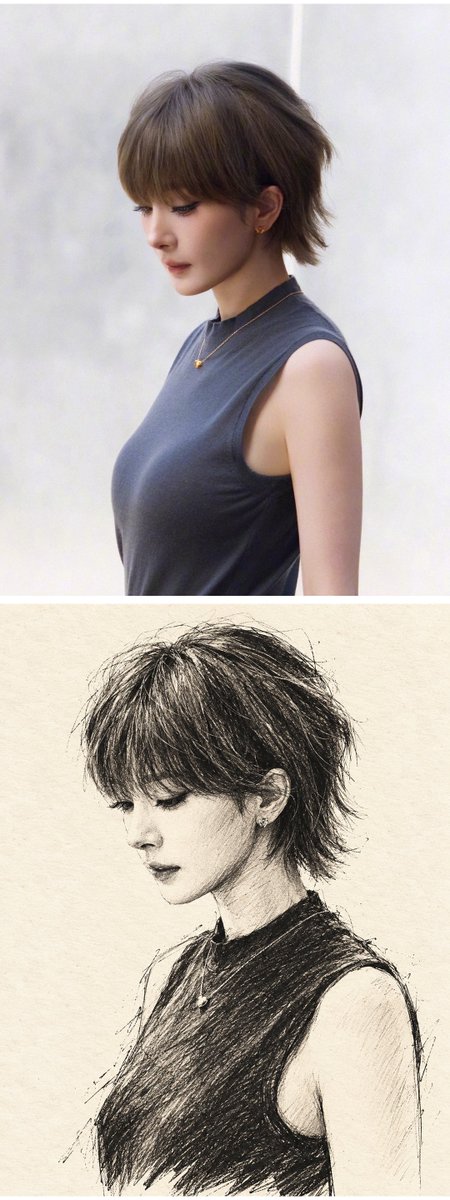
Use the uploaded photograph as the sole visual and content reference.

Transform the photograph into one standalone monochrome editorial ink illustration printed on warm off-white, lightly textured paper. Output only the finished illustrated page—not the original photograph, not a before-and-after comparison, not a split-screen layout, and not a collage.

Preserve the source image’s main subject, recognizable silhouette, viewpoint, pose, expression, gesture, proportions, orientation, important contours, and essential interaction with objects. The drawing must remain immediately recognizable as the same subject and moment.

This transformation must work for people, animals, food, everyday objects, vehicles, and still-life scenes. Identify the main subject automatically and give it visual priority. Preserve distinctive features that carry recognition—for example facial expression, hairstyle, eye direction, open mouth, animal markings, ear shape, cup handle, latte pattern, bicycle frame, basket, flowers, spokes, or other defining structures visible in the source.

Redraw the subject using expressive black dry-ink, rough charcoal, grease-pencil, and broken lithographic marks. Use energetic, imperfect contours; scratchy repeated strokes; irregular pressure; dry-brush gaps; grainy black deposits; loose cross-hatching; scattered speckles; and partially missing edges. Let some lines overlap or overshoot naturally. The result should feel physically drawn by hand and mechanically printed on absorbent paper.

Use only deep black ink and the warm ivory color of the paper. Build form through line density, broken black masses, negative space, sparse hatching, and raw directional strokes. Do not use continuous grayscale shading, smooth gradients, photographic tonal modeling, or clean digital fills.

Simplify secondary details aggressively. Remove the photographic background unless a background element is necessary to identify the subject or explain its pose. Reduce necessary context to a few loose grounding lines, faint shadows, fragmented texture, or minimal environmental marks. Keep large areas of clean paper visible.

For human portraits, preserve the approximate face shape, hairstyle, gaze direction, expression, mouth position, shoulders, and visible clothing category. Draw the eyes, nose, and mouth with sparse but expressive marks. Emphasize the rhythm and volume of the hair with dense, tangled strokes when appropriate. Do not beautify, change identity, or replace the expression.

For animals, preserve species, head shape, beak or muzzle, eye placement, markings, posture, and expression. Use denser black marks in dark feathers or fur and paper-white reserve areas in lighter regions.

For objects, preserve functional geometry and recognizable construction while allowing loose perspective and handmade irregularity. Keep important circular, mechanical, or structural relationships readable without turning the image into a precise technical drawing.

Create a balanced editorial-page composition. Place the main illustration in the central or right portion of the page, occupying most of the visual area, while reserving a clean vertical block of negative space on the left for optional typography. If the original subject requires the full width, reduce the text area instead of distorting or cropping the subject.

Optional typography module:
Only when the user supplies exact wording, place a restrained editorial text block in the negative space using elegant high-contrast serif typography. Arrange it in this hierarchy:

[ISSUE NUMBER]
[SHORT TITLE]
—
[ONE-LINE CAPTION]

Use black ink, left alignment, generous line spacing, and clear typographic hierarchy. The title may wrap naturally across two short lines. Keep the text visually secondary to the illustration.

Use only the exact text supplied by the user. Do not invent issue numbers, titles, captions, names, dates, slogans, or quotations. If no text is supplied, omit typography and use the empty area as intentional negative space.

Overall aesthetic: raw editorial spot illustration, handmade black-ink sketch, vintage literary magazine page, dry lithographic print, expressive observational drawing, tactile paper grain, restrained monochrome design, spontaneous but carefully composed.

Avoid: displaying the source photograph, top-and-bottom comparison, split screen, photo-and-drawing collage, realistic pencil portrait, smooth graphite gradients, gray wash, watercolor, colored ink, clean vector outlines, uniform line weight, polished digital illustration, comic-book inking, anime, manga, photorealism, precise architectural drafting, excessive background detail, solid black background, decorative borders, changed pose, changed expression, generic replacement subject, missing defining features, invented objects, malformed anatomy, extra limbs, gibberish text, logos, signatures, or watermarks.