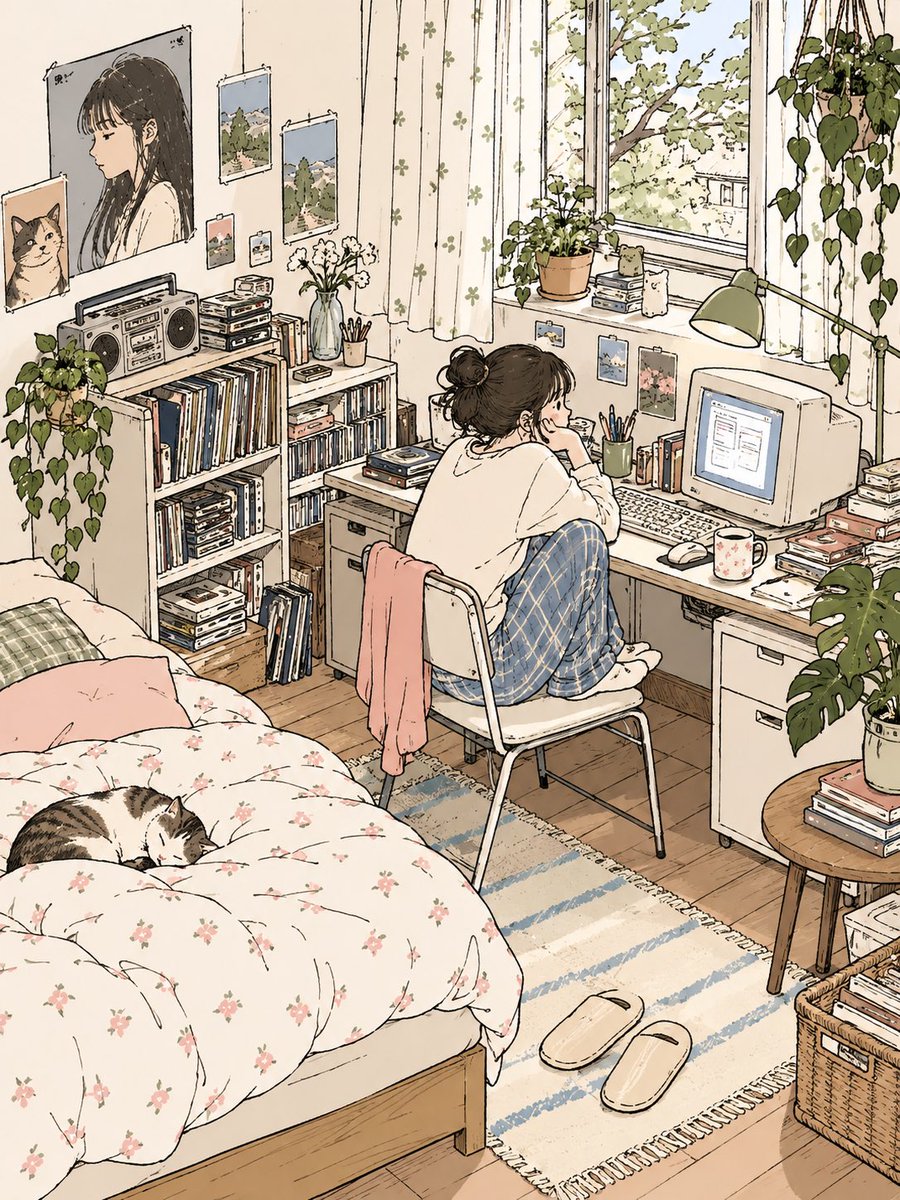
Prompt Part 1:

MY DREAM ROOM — UNIVERSAL PROMPT

COUNTRY: [Enter country]

THEME: [Enter theme, era, or room concept]

⸻

CREATIVE DIRECTION

Create a simple, stylish, Korean-inspired hand-drawn illustration of a cozy room based on the COUNTRY and THEME specified above.

Automatically interpret both inputs to determine the room’s architecture, interior design, furniture, everyday objects, cultural details, atmosphere, and historical context.

The room should feel like an authentic personal space belonging to someone living in the specified country and theme, rather than a generic interior decorated with cultural symbols.

If the theme includes a historical period, accurately reflect the technology, furniture, fashion, entertainment, and everyday lifestyle of that era.

The final illustration should feel nostalgic, intimate, creative, and lived-in.

STYLE CONSISTENCY

Minimalist, slightly rough 2D illustration primarily composed of black hand-drawn ink lines.

Deep black outlines, neither too thin nor too thick.
Naturally varying line thickness with subtle hand-drawn wobble.
Slightly irregular, loose, freehand contours.
Leave some outlines open or broken.
Simplify furniture and objects using minimal lines.
Preserve generous white space.
Apply color sparingly.

Maintain a charming, relaxed Korean-inspired illustration aesthetic regardless of the country or theme.

The illustration style remains consistent while the room design changes.

CULTURAL & HISTORICAL AUTHENTICITY

Analyze the selected COUNTRY and THEME before designing the room.

Adapt the following elements naturally:

Architecture: Typical residential buildings, room dimensions, windows, doors, flooring, walls, and architectural features associated with the location and era.

Furniture: Authentic beds, desks, chairs, wardrobes, storage solutions, shelving, and household furniture commonly found in that country and period.

Technology: Historically appropriate televisions, computers, radios, music players, telephones, and everyday electronics.

Personal belongings: Books, magazines, stationery, clothing, toys, hobbies, music collections, photographs, and other objects appropriate to the theme.

Cultural details: Everyday household items, textiles, decorative objects, plants, and design traditions that naturally belong in the space.

Outside environment: A realistic view through the window reflecting the country’s architecture, geography, climate, and neighborhood character.

Lifestyle: Arrange objects to suggest the interests, habits, daily routines, and personality of the room’s occupant.

Avoid stereotypes, tourist imagery, exaggerated cultural symbols, or historically inaccurate objects.

Prioritize the feeling of an authentic home over a carefully staged interior.

ROOM DESIGN

Create a distinctive room inspired by the chosen theme.

Naturally arrange a selection of appropriate furniture and accessories, such as a desk, chair, bed, window, curtains, bookshelf, plants, lighting, wall art, and personal objects.

Do not force every object into every scene. Choose only what makes sense for the selected country, theme, and historical period.

Mix furniture and belongings naturally, allowing small imperfections, casual clutter, and signs of everyday life.

Make the room cozy and lived-in without overcrowding the composition.

The room should tell a visual story about its occupant without relying on written explanations.

CHARACTER

Include one person if appropriate to the theme.

Automatically determine a suitable age, appearance, hairstyle, clothing, and activity based on the chosen country and theme.

Show the character naturally engaged in an everyday activity, such as reading, listening to music, studying, working, drawing, resting, or enjoying a hobby.

Use simple black line art with minimal facial features.

Dress the character in clothing appropriate to the culture, era, and room concept.

Keep the character secondary to the room’s overall atmosphere.